
Google Helpful Content & E-E-A-T Update Webinar

SEO: Recovery from Google HCU/E-E-A-T Updates


  • Assess Losses 
  • Understand Underlying Factors
  • Address / Resolve, Plan & Execute
  • Recover Rank + Traffic

Part 1 of the webinar has ran and is available for download now.

Google’s core updates can have a significant impact on personal sites / hobby and affiliate sites / client sites – sometimes understanding why they were impacted & what to do about it can seem like a daunting task. This webinar will cover analysis & resolution – and what you can be doing to recover and reduce the potential impacts from future updates.

The webinar will be available live or in a recorded format for anyone who can’t attend during the live event. You will be provided with the full video to download.
Sale!

Ranking Recovery Webinar

Original price was: £39.99.Current price is: £29.99.

The ranking recovery webinar is aimed to helping SEOs to better understand ranking losses, traffic decline and update specific impact. The webinar will show you processes to evaluate update impact, ascertain factors that may be behind losses and how to address them with a structured approach to diagnosis, testing and recovery. You’ll learn SEO diagnostic processes, how to understand and interpret data, better understand Google core updates, how to segment impact, how to create a recovery plan and more.

Category:
The ranking recovery webinar is aimed to helping SEOs to better understand ranking losses, traffic decline and update specific impact. The webinar will show you processes to evaluate update impact, ascertain factors that may be behind losses and how to address them with a structured approach to diagnosis, testing and recovery. You'll learn SEO diagnostic processes, how to understand and interpret data, better understand Google core updates, how to segment impact, how to create a recovery plan and more.

FREE 2 HOUR RECORDING PREVIEW

Watch a 2 hour free preview from part 1 of the webinar – this is a 2 hour sample – the rest of the recording and upcoming part 2 can be purchased above.

Google Core Update Ranking & Traffic Losses

No one wants to see hard earned traffic disappear during and after a Google core update – but the reality is, Google’s shifting algo’s hit sites good and bad – seeing system / sequential loss can be frustrating, damaging to businesses financially and ultimately – can create significant challenges when it comes to recovery – whether your sites were wiped out fully by a core update related to Helpful Content, or perhaps they saw initiating decline as a result of a Link Spam or E-E-A-T update and now that decline has snowballed – Google core updates can be “generic” in what they’ve focused on – but, there are generally hundreds of underlying factors that can shape how core updates impact SERPS.

What Will This Webinar Cover?

In this webinar, we’ll cover various aspects of Google’s core updates, history and what the future may hold – the webinar will include:


  • Understanding which updates truly impact your domain
  • Sudden decline vs initiated decline
  • Shifting SERPS
  • Shifting site types
  • E-E-A-T Compliance
  • Helpful Content – measuring it
  • Identifying your loss types
  • Building a recovery strategy
  • Query counting
  • Cull vs Keep – what you should be doing with content
  • Building a Recovery POA
  • Executing a Recovery POA

And more.

Who is this webinar for?


This ranking recovery & google update impact analysis webinar is suitable for intermediate / advanced SEOs irrespective of whether they are independent, in house or client side.

This webinar is suitable for all SEOs as it covers something that impacts all within the industry.

This webinar is suitable for SEOs who run sites that have been negatively/adversely impacted by Google core updates, websites that have been impacted by historic updates where the decline has been gradual or even for SEOs who just want a better idea of understanding algo impact, how to ascertain impact / type of impact and what to do to recover.

Google Helpful Content Updates

In this webinar, we’ll look at the true impact of Google helpful content updates – what they mean for SEOs / website owners and why now is time to adjust any legacy SEO strategy that you may be running.

Google’s line of helpful content updates address content created for search and not for the end user, they will take into consideration intent, value of content and probability of satisfying end users needs (needs met).

Machine learning + big data give Google the ability to look at far more data points when it comes to evaluating “what is useful”, “how is it useful” and how people react/behave.

Helpful Content: AI

With the advent and boom of AI – content production has seen an innovative twist – however, in a large volume of cases, AI is being used to generate content at scale – quite often AI content isn’t helpful content because it’s often misaligned, out of scope, doesn’t comply with E-E-A-T, isn’t always completely unique, doesn’t always add value, doesn’t flow + so many other factors.

Google’s drive to deliver BETTER results is based on more than traditional ranking factors – if a piece of content is genuinely useful, it will meet traditional ranking factor requirements & surplus E-E-A-T/HC – but, what is truly useful content? does Google always get it right? how is Google addressing people first content vs content written for search engines?

Ranking Recovery is Crucial For Many Businesses

Google’s core updates can wreak havoc on businesses – loss of rank and traffic can have a devastating impact on sales/conversions/enquiries.

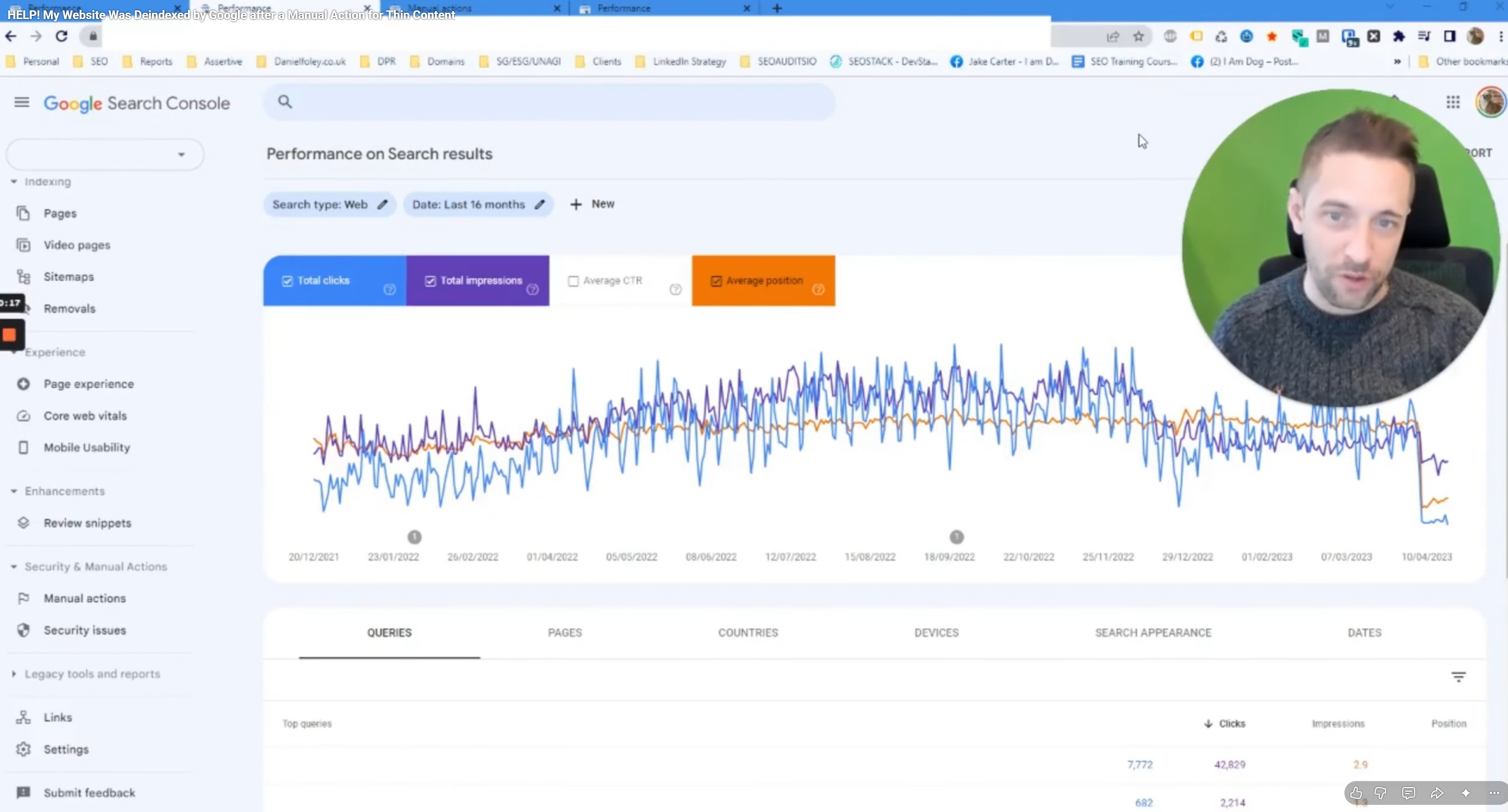
Losing 20%, 30%, 50%, 80% of clicks can lead to significant revenue losses.

And – it’s not uncommon for people/businesses/SEOs to PANIC when they see that blue click line go into freefall.

The reality is – many sites that see significant impact often have longer-standing issues that contribute to the decline – this can make reversing those losses more complex, take longer and involve more money / stress.

Getting your Google update analysis right from the outset can save a lot of time and stress and can help speed up a recovery of lost rank and clicks.

Google Helpful Content & E-E-A-T / YMYL Based Core Updates

Sudden Ranking Losses

Sudden ranking losses tend to indicate a wider “lack of compliance” when it comes to content – generally you have 2 types of loss (gradual and sudden) – sudden ranking losses can be a shift in E-E-A-T evaluation, if lots of your articles no longer meet E-E-A-T you can expect to see sudden ranking losses – but, other things could be at play, a lack of trust in the brand / links, accessibility issues, latent index issues and more.  Sudden rank loss is GENERALLY more from content based algo changes.

Gradual Ranking Losses

A loss of trust in the brand / domain, content stagnation, general domain fatigue and other factors can lead to gradual ranking losses, sometimes initiated by a core update – where those losses compound month on month over time. Gradual ranking losses can sometimes be harder to reverse, depending on what the potential cause behind the gradual click loss is. Gradual click loss is often a result of “rank slippage”.

E-E-A-T Improvements

Some sites that fall foul of E-E-A-T can still offer good content – E-E-A-T is not a standalone factor, so in some cases, decline can relate to other factors such as links/trust. Many core updates (general core updates) see enhancements/changes to E-E-A-T factors, shifting weighting can go in favour or against your current E-E-A-T compliance – it is here that the discovery phase is needed to ascertain – COULD you be better adhering to E-E-A-T whilst keeping your content people first.

SERP Refreshes & Recyling

Sometimes update related ranking slippage and loss can be down to SERP Refreshes – sometimes long running URLS with content that was established for a long-period  but hasn’t evolved withthe SERP can begin to fatigue and slip during SERP refreshes. SERP recycling tends to be when other results rank during a turn-over phase of result displacement – understanding how the SERP has changed across E-E-A-T / Helpful Content Updates is key.

Learn How to Negate Google Helpful Content Updates

No one knows exactly what each helpful content update entails – it’s generally a case of the update being deployed, evaluating the data and making decisions based on that data.

Helpful content – by definition is content that’s helpful – it’s ascertaining what is helpful?

Understanding what users are and have been doing with your content is key – if you have had established rankings that all of a sudden drop as a result of Google’s HCU deployments – then it’s time to start looking at the data – after ruling out tech issues, link losses, rendering or accessibility issues – we need to start understanding – how has the SERP changed, what has displaced our site? whilst it ranked, did our content exhibit engagement fatigue? 

The better we understand touch points for data – the easier it becomes to properly apply best practice to our analysis and implementation to make sure CONTENT IS AMAZING for the end user and set up in such a way that it is deemed “helpful content”. 

Google doesn’t want content written to rank, it wants to serve content that maximises a positive user experience by being helpful and helping users to complete what they were looking to do (intent perspective).

Our Clients Have Included 

Client Case Study 

“Daniel’s last round of webinars have been extremely useful in helping our team develop their SEO skillset and approach to SEO”


We’ve enrolled on Daniel’s webinars – and so far, we’ve been blown away by the approaches and level of detail that is gone into – Daniel’s content shows how he interprets data along with explanations and clear cut examples.

Our team has been able to watch, digest and understand the processes as well as why they are important.

I highly recommend the webinar content – it’s been a goldmine for our in house team.

Arianne Kierabile – RM IMPC Consultants


How AI Will Impact Search Algorithms

Search algorithms are the computer programs that search engines use to rank websites and their content. With AI, search algorithms are becoming more sophisticated, accurate, and data-driven.

AI-powered algorithms such as Google’s RankBrain and BERT are using NLP and machine learning to understand search queries and provide more relevant and accurate search results. This means that website owners need to optimise their content for user intent and provide high-quality and relevant content to rank higher on search engine results pages.

Google has already been using AI as part of Rank Brain and now Spam Brain – we can expect to see significant advancements in Google’s algorithms and how it decphyers content of value based on end user intent, quality and trust.